
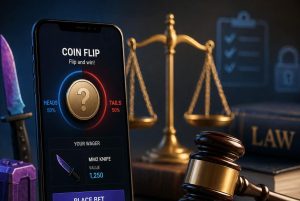
 The growth of digital economies in online games has introduced new forms of value exchange, including the practice commonly referred to as MM2 skins betting. Linked to the Roblox game Murder Mystery 2 (MM2), this activity involves wagering virtual items, such as collectible weapon skins, in player-versus-player systems or through third-party platforms. As these systems have become more visible, questions have emerged about how they fit within existing gambling laws.
Understanding the legal position of MM2 skins betting requires examining how laws define gambling, how virtual items are treated, and how regulators approach emerging digital behaviors.
Defining Gambling in Legal Terms
Most legal systems define gambling based on three core elements:
- Consideration: something of value is wagered
- Chance: the outcome is at least partly random
- Prize: something of value is awarded
If all three elements are present, an activity is often classified as gambling under the law. Applying this framework to MM2 skins betting raises important questions. Players typically wager in-game items; outcomes may be determined by chance (e.g., coin-flip systems), and winners receive additional items. On the surface, this structure appears to align with traditional definitions of gambling. However, the classification is not always straightforward.
The Role of Virtual Items
A key issue is whether virtual items qualify as something of value. In MM2, skins and items are digital assets that exist within the game’s ecosystem. They can represent:
- rarity or status among players
- time invested in acquiring them
- trading value within the community
While these items may not have official monetary value recognized by the game developer, they can carry perceived or secondary-market value among users. This creates a legal gray area.
Some jurisdictions consider virtual items as having value if they can be traded, exchanged, or indirectly converted into money. Others take a stricter view, focusing only on officially recognized currency or financial instruments.
As a result, whether MM2 skins betting meets the requirements for consideration and prize elements under gambling law may depend on how a jurisdiction interprets digital assets.
Chance vs Skill Considerations
Another factor is the role of chance in the activity. Many MM2 skins betting systems, particularly coinflip-style formats, are based on random outcomes. This aligns closely with chance-based gambling models.
However, some platforms may present variations that involve user decisions, timing, or strategy. Even in these cases, if chance remains a dominant factor, regulators may still classify the activity as gambling. In legal contexts, the distinction between skill and chance can influence how an activity is regulated, though chance-based systems are more likely to fall within traditional definitions of gambling.
Platform Structure and Third-Party Involvement
MM2 skins betting is typically conducted through third-party platforms, rather than within the official Roblox environment. This distinction has legal implications:
- Game developers may prohibit or restrict such activities in their terms of service.
- Third-party platforms operate independently, often outside the game publisher’s direct control.
- Regulatory oversight may be limited or unclear, depending on the platform’s location.
Because these systems exist outside official game mechanics, they may not be subject to the same safeguards or compliance measures as licensed gambling operators. This separation can complicate enforcement, especially when platforms operate across multiple jurisdictions.
Jurisdictional Differences
Gambling laws vary significantly across countries and regions, which affects how MM2 skins betting is treated. In some jurisdictions:
- Any activity involving value, chance, and reward may be classified as gambling, regardless of whether the currency is virtual or real.
In others:
- Legal definitions may not yet fully account for digital item betting, leading to regulatory gaps
Additionally, enforcement can be challenging when:
- platforms operate internationally
- users access services across borders
- transactions involve digital assets rather than traditional payment systems
These factors contribute to inconsistent legal interpretations and outcomes.
Consumer Protection and Age Considerations
A recurring concern in discussions of MM2 skins betting is user protection, particularly for younger audiences. Traditional gambling laws often include safeguards such as:
- minimum age requirements
- licensing and monitoring of operators
- mechanisms for dispute resolution
When similar protections are absent or unclear in digital item betting systems, regulators may examine whether additional oversight is needed.
Legal Gray Areas and Ongoing Debate
MM2 skins betting exists within a broader category often referred to as skin betting or digital item wagering. This area has been the subject of ongoing legal and policy discussions. Key points of debate include:
- whether virtual items should be treated as monetary equivalents
- How to regulate platforms that operate across jurisdictions
- The extent to which existing gambling laws apply to new digital formats
Some regulators have taken steps to address similar systems in other games, while others are still evaluating how best to approach these developments. As digital economies continue to evolve, legal frameworks may adapt to provide clearer definitions and guidance.
Conclusion
MM2 skins betting sits at the intersection of gaming, digital economies, and gambling law. While it shares structural similarities with traditional gambling, such as wagering, chance, and reward, its reliance on virtual items and third-party platforms introduces complexity.
Whether it is classified as gambling depends largely on how laws define value, interpret chance, and address digital assets. Differences in jurisdiction, regulation, and enforcement further shape how these systems are treated.
A neutral understanding of MM2 skins betting within existing gambling laws highlights both the applicability of traditional legal principles and the challenges of applying them to evolving digital environments.