
The United Nations Office on Drugs and Crime (UNODC) and several international policy bodies have repeatedly noted that digital systems move across borders much faster than legal frameworks can adapt. Online gaming and gambling platforms can operate globally within seconds, while laws often remain tied to national boundaries and local governments.
People entering digital platforms often encounter different rules depending on where they live. Platforms such as DidiHub may illustrate how users can encounter varying requirements, since basic activities such as identity verification, payment procedures, age restrictions, and account setup requirements may differ from one country to another because regulators apply different standards and legal definitions. These differences create challenges for users, operators, and policymakers who are trying to understand how digital activities fit within existing legal systems.
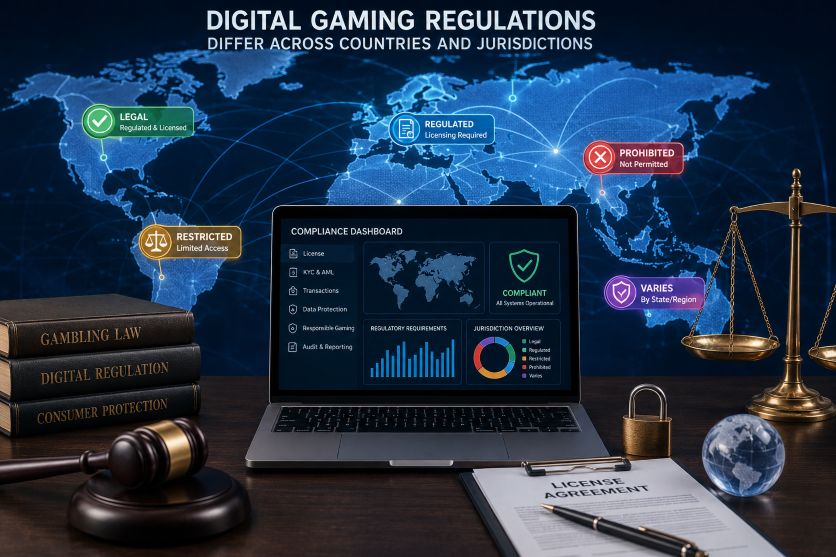
Why Regulatory Differences Exist
One of the main problems is that countries approach digital gaming through different legal lenses. Some governments classify online gambling as a form of entertainment activity, while others connect it to consumer protection, public health concerns, financial oversight, or criminal law. Because of this, a single platform can face entirely different obligations depending on where it operates.
Historical, cultural, and economic factors also shape regulatory choices. Certain regions maintain stricter policies because of social attitudes toward gambling activities. Others focus more heavily on taxation and licensing structures that allow controlled participation. Several jurisdictions choose hybrid systems that combine restrictions with monitored access.
The World Bank has frequently discussed how legal systems are influenced by local institutions, economic priorities, and governance structures. Digital regulation follows a similar pattern. Laws rarely emerge in isolation. They usually reflect broader national priorities.
This creates a practical issue. A company operating in multiple countries may need to comply with dozens of legal requirements at once. Age verification rules, payment limitations, data collection standards, and reporting obligations can all differ substantially.
Challenges in Enforcement Across Borders
Regulatory differences become more complicated when digital environments extend beyond geographic boundaries. Traditional enforcement systems were designed around physical locations. Digital platforms function differently because users, payment providers, and operators may exist in separate jurisdictions.
Consider a situation where a user accesses a platform in one country while the company itself operates servers in another location and processes payments through a third region. Determining which laws apply can become difficult.
Authorities may face questions such as:
- Which country has enforcement authority?
- Which consumer protection laws apply?
- How should disputes be resolved?
- Which privacy standards should govern data collection?
- Who is responsible for monitoring transactions?
The Organisation for Economic Co-operation and Development (OECD) has discussed similar cross-border issues involving digital commerce and online platforms. Their research highlights that international cooperation often becomes necessary because national regulations alone may struggle to address globally connected systems.
Without coordinated frameworks, enforcement can become inconsistent. One jurisdiction may consider a service legal while another may impose restrictions or require additional licensing.
International Perspectives on Digital Gaming Laws
Different countries illustrate how regulatory philosophies vary.
Some European jurisdictions focus heavily on licensing systems and consumer protection measures. Their regulations may require operator transparency, spending controls, and responsible participation tools. Other regions maintain stricter limitations that restrict access entirely.
In North America, legal structures can become layered because federal systems often allow state or provincial authorities to establish separate rules. This creates internal differences even within the same country.
Several Asian markets also demonstrate varying approaches. Some governments maintain highly restrictive frameworks, while others permit controlled systems with close regulatory oversight.
These international differences create a larger challenge for digital governance. Consistency becomes difficult when legal definitions themselves differ.
For example, one jurisdiction may classify certain gaming activities as skill-based participation while another views similar activities under gambling regulations. Small legal distinctions can create substantial compliance changes.
Moving Toward Evolving Legal Frameworks
The solution increasingly discussed by policymakers involves creating adaptive frameworks rather than relying entirely on older legal structures. Digital systems evolve quickly, and static regulations sometimes struggle to keep pace.
The European Commission has introduced broader digital governance initiatives emphasizing accountability, transparency, and risk management responsibilities. While these policies may not target every gambling-related issue directly, they reflect a wider trend toward flexible regulatory thinking.
Governments are also exploring stronger international cooperation. Shared standards related to cybersecurity, consumer protection, identity verification, and digital transactions may eventually reduce regulatory gaps.
Technology itself may support parts of this process. Automated compliance tools, stronger identity systems, and improved reporting methods could help regulators monitor activity across jurisdictions more effectively.
Still, complete legal uniformity remains unlikely. Countries maintain different social values and policy priorities. Regulatory differences will probably continue to exist because laws often represent local decisions rather than global consensus.
READ ALSO: Understanding the Legal Grey Areas Around Offshore Gambling Access for UK Players
Understanding the Larger Picture
The broader discussion surrounding digital gaming regulations extends beyond legality alone. It also touches on consumer safety, technological innovation, privacy rights, and economic policy. As digital platforms continue expanding internationally, governments face pressure to balance flexibility with oversight.
Understanding these differences helps explain why users may encounter changing requirements and varying digital gaming rules across regions. While technology creates increasingly connected experiences, legal systems continue developing at their own pace. The future may involve stronger coordination, but local regulation will likely remain an important part of digital governance.
Responsible Gambling Risk Warning: Gambling-related activities involve financial and behavioral risks. Participation should occur responsibly and within applicable local laws. Individuals experiencing harmful patterns of behavior should seek professional support or assistance services available in their region.
As international conversations continue evolving, digital gaming regulation will remain an area shaped by technology, public policy, and legal interpretation. Understanding these differences provides a clearer view of how regulatory systems influence modern online participation.